Uncategorized

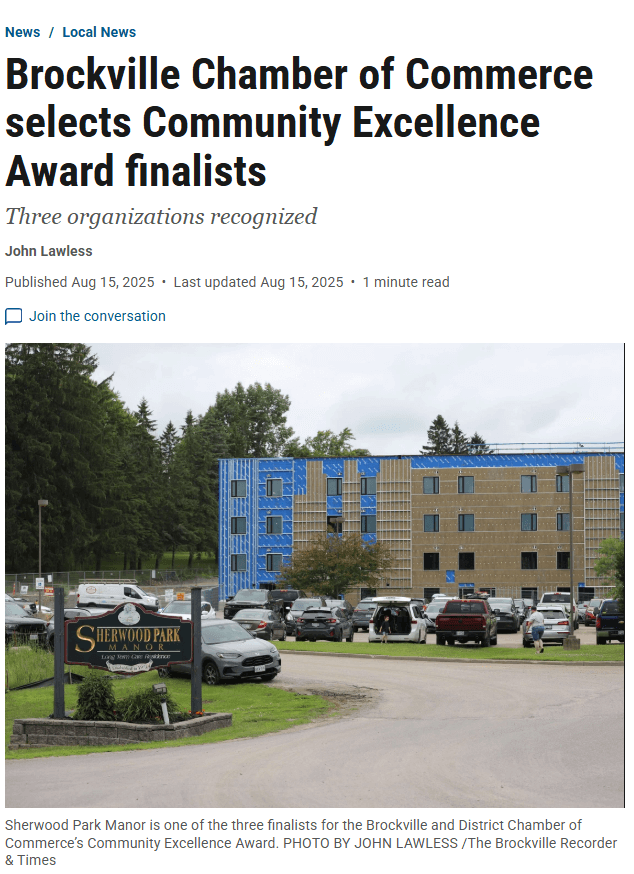
Brockville Chamber of Commerce selects Community Excellence Award finalists
Sherwood Park Manor is one of the three finalists for the Brockville and District Chamber of Commerce’s Community Excellence Award. Photo by JOHN LAWLESS / The Brockville Recorder & Times
Click the link above for the full article.
Serving Joy: Inside Sherwood Park Manor’s Creative Food Programs
At Sherwood Park Manor, the vibrancy of our community is often found in the hands of our dedicated Life Enrichment team. Today, we’d like to introduce you to two members of that incredible team: Deanna Jackett and Justine Stevens.
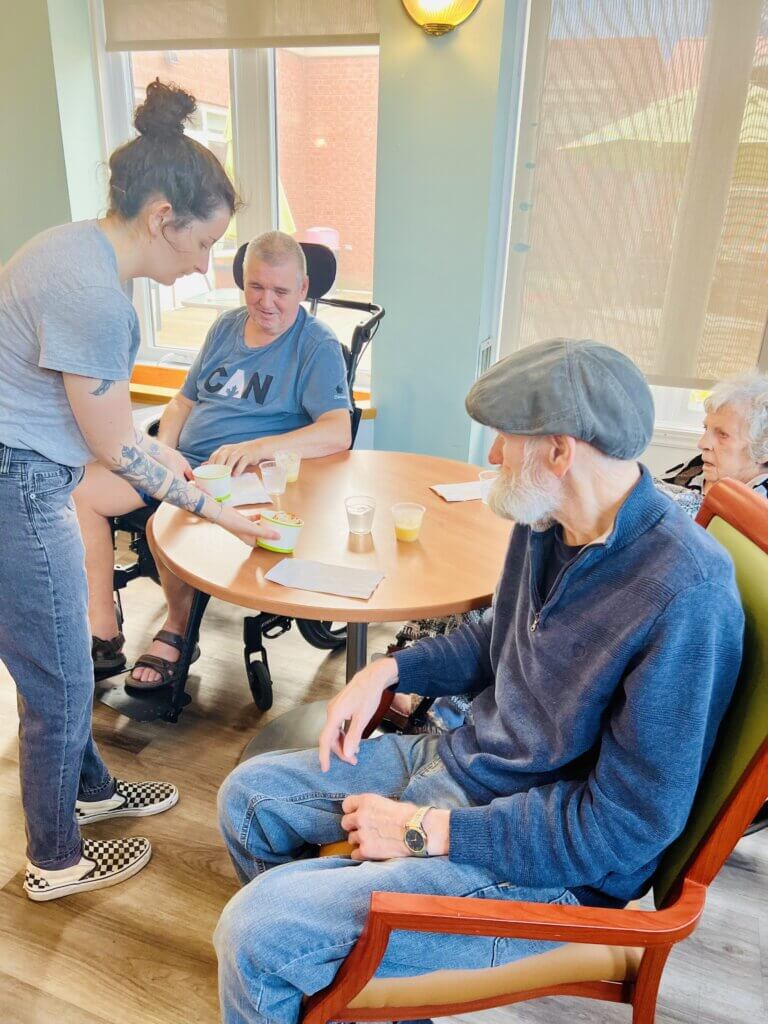
As full-time Life Enrichment staff, Deanna and Justine are the creative minds and compassionate hearts behind much of what makes life here at the Manor so special. You’ll find them coordinating activities and engaging programs, sharing conversation with residents, and lifting the spirits of everyone who passes through our doors. More than just event or activity planners, they play a crucial role in tailoring unique care plans, ensuring each resident’s journey with us is fulfilling and joyful.
In 2022, nearing the end of the COVID-19 pandemic, Deanna had the idea to create ‘Food Around the World’, a program designed for residents to learn about and taste food from various countries and cultures. We chatted with Deanna and Justine to learn more about this delicious enrichment program and Food Four Ways – a spin-off of Food Around the World.
Tell us about Food Around the World
“One of the most anticipated monthly events is Food Around the World,” Deanna shares. She described how the program takes residents on a culinary journey, dedicating each month to the exploration of a new country.
“We break it down into four delicious parts: a traditional drink, a tempting appetizer or snack, a satisfying main dish, and of course, a dessert to top things off.” It’s more than just a tasting; Deanna explained that each bite-sized serving offers an opportunity to learn. “As they savour each item, we talk about the country’s history and the stories behind the food itself.”
Justine adds, “We really aim to make it interactive and fun for everyone. It’s wonderful to see how much the residents look forward to it – it’s definitely become a highlight!”
How do you pick the country each month?
Deanna says the program started with familiar dishes from North America and has since expanded to European countries, a few in South America, and now the program is exploring Asian cuisine.
“We’ve run 26 Food Around the World events. We’re thrilled it’s been such a successful program that always gathers a lot of interest”, shared Justine.
How did Food Around the World begin?
Food Around the World was a passion project for Deanna, who is eager herself to get out there and begin travelling.
“It was after a few years working through the pandemic and wanting to travel myself, that I thought of this program”, Deanna shared. “I proposed the idea to our Executive Director Nancy, and as a fellow foodie, she loved the idea”.
Deanna explained that while the food program was her idea initially, she knew she needed to recruit some help in order to run the program to its full potential. Deanna approached Justine, and together they brought the program to life.
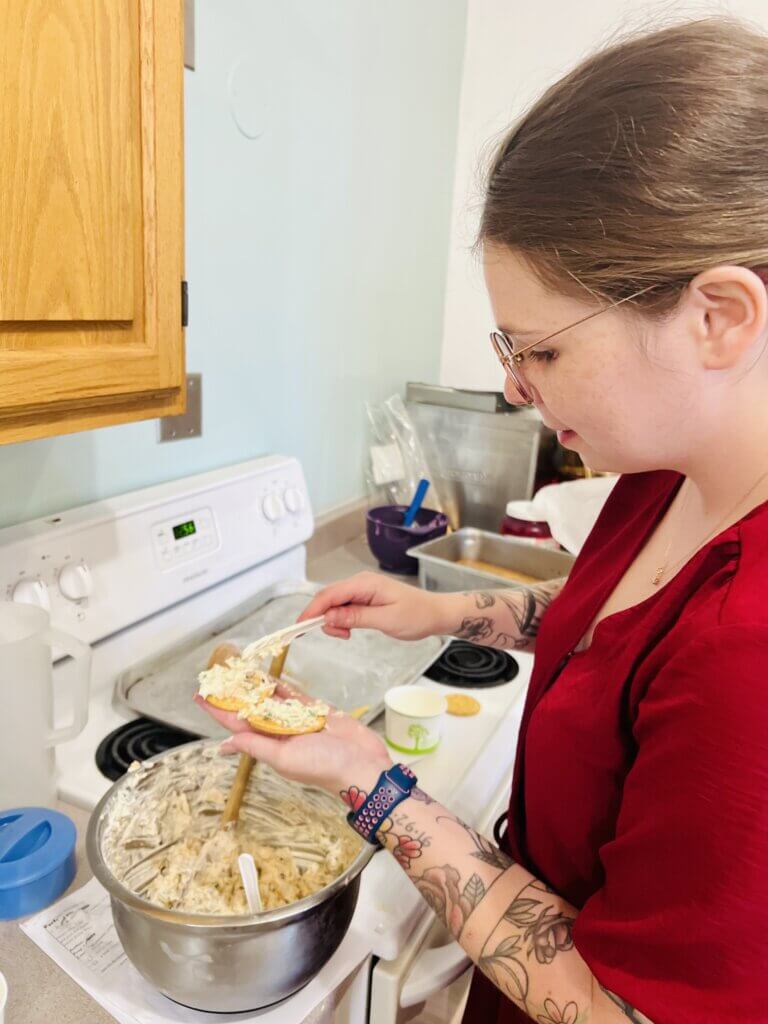
“We take turns deciding on the country and foods to do”, Deanna said. “Justine takes the role of preparing and cooking the food items and I put together the presentation side where I explain the country, some history and some background of each food item.”
Deanna shared that she doesn’t know of many other long-term care homes offering this type of program for their residents. “It’s a program that requires a lot of thought, planning, and research in terms of the country and the presentation/history component of the program.”
Justine adds that she enjoys cooking and as a picky eater herself, she has enjoyed learning about new cuisines and stepping out of her comfort zone, a sentiment she feels many residents also share.
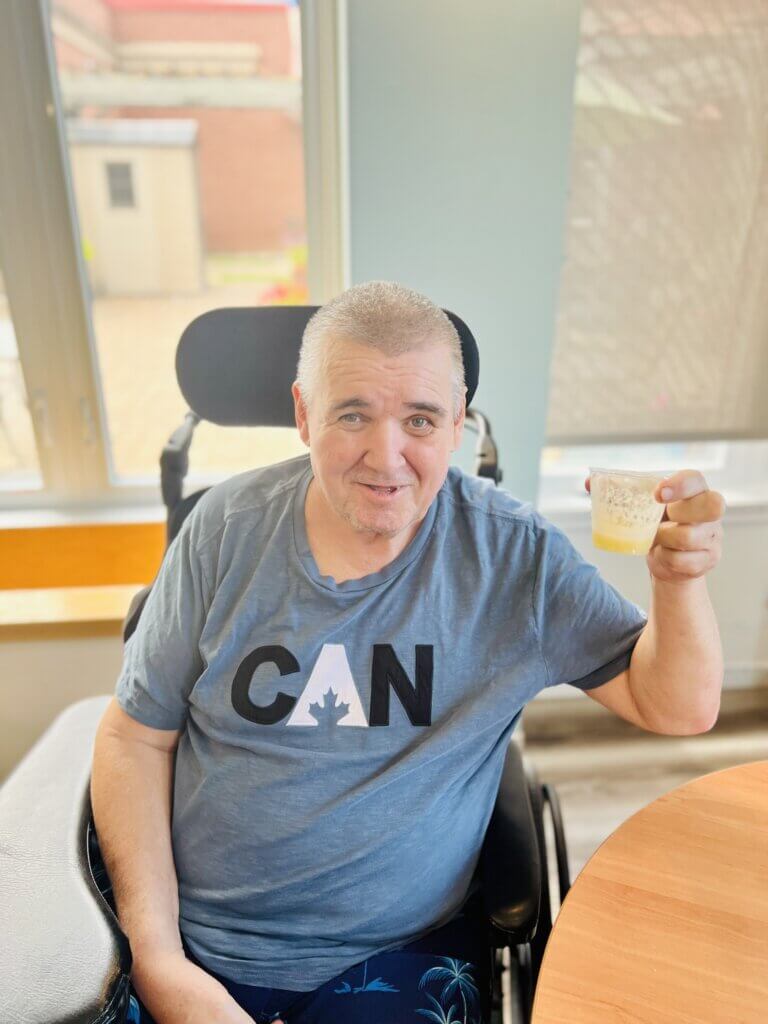
After experiencing such enthusiasm for this program, the two came up with a second food-inspired activity they call Food Four Ways.
Tell us more about Food Four Ways
“Food Four Ways was created only a few months after Food Around the World,” Justine shares. “The idea was more about taking a simple food item and seeing what you can make from it.”
“For residents to try potatoes four ways, we made mashed potatoes, French fries, hash browns and potato salad,” Deanna explained. “We’ve also tried this program with tomatoes, cucumbers and other fresh ingredients.”
These programs have become such a beloved fixture at the Manor, and our continuation over the last few years is a direct testament to the overwhelmingly positive response from our residents.
Their enthusiasm says it all: “I like it. We get to try new things. I love to eat,” shared one resident, while another simply stated, “They’re good.” Many appreciate the unique experience it offers, with comments like, “I think it is wonderful,” and “I like the food activities; it is something to do besides watch television and do crossword puzzles.” For others, it’s a welcome taste of variety: “It gives you something a bit different than what they serve here.”
The program even offers a sense of adventure and learning, as one resident beautifully put it, “I like trying all the kinds of food from all the different places and learning about each one. It is kind of like travelling there.”
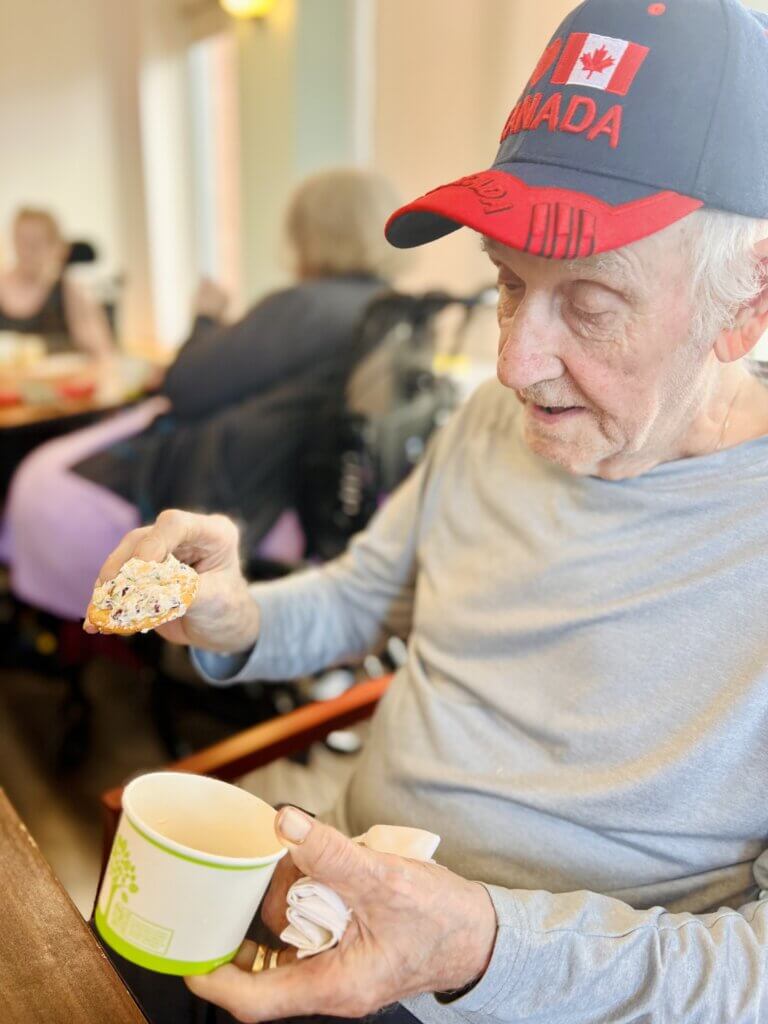
Beyond the culinary delights, it fosters connection, with one resident noting, “We get to meet the neighbours.” The anticipation for specific countries is palpable too, as seen with the keen interest in the recent Ukrainian feature: “I am very interested in this one.” It’s not just the residents who are captivated; we’ve even noticed some of our staff eagerly dropping by to see what delicious creations are being sampled each month, a true sign of a program that brings joy to the entire community.
Deanna and Justine, with their passion and creativity, have truly cooked up something special here at the Manor. Programs like Food Around the World and Food Four Ways are more than just activities; they are vibrant threads in the fabric of our community, weaving together joy, learning, and connection. It’s a beautiful reminder of how dedicated members of our team can enrich the lives of others, one delicious discovery and shared experience at a time.
We are incredibly grateful for their commitment to making every day at the Manor a little more flavorful and engaging.
Flipping the Script: Physiotherapy’s Role in Long-Term Wellness
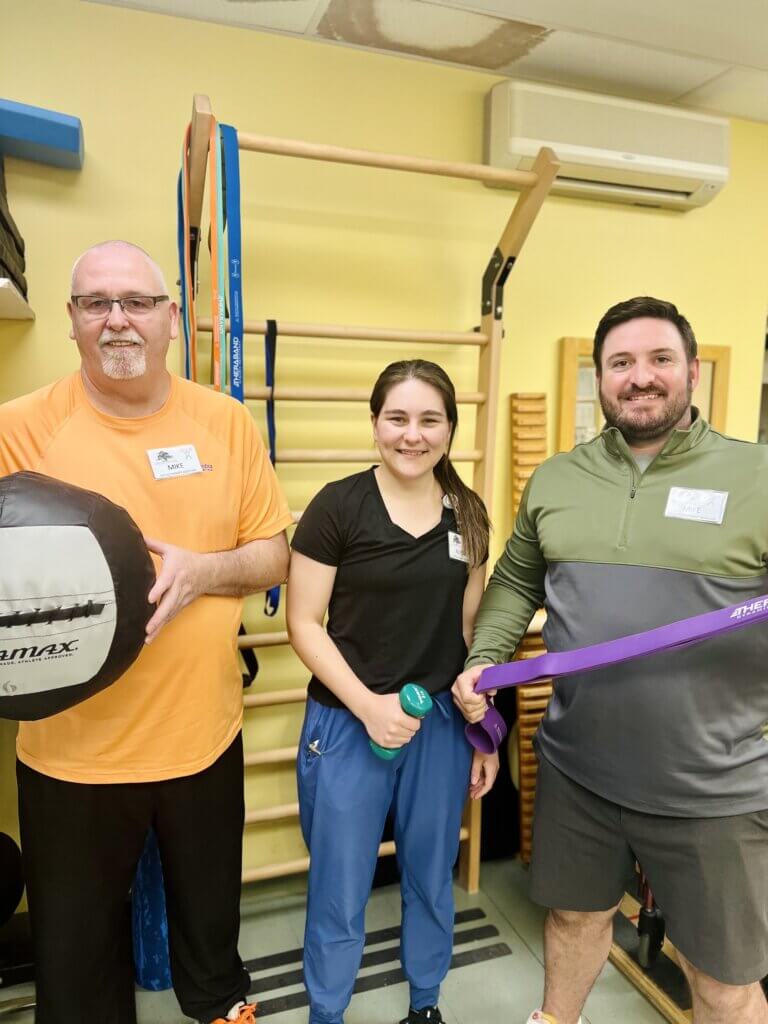
Gone are the days when “health” simply meant bouncing back from illness. Today, we’re building a more proactive and holistic approach to well-being. We see long-term wellness as the ultimate goal; living longer, healthier and more active lives has never been more achievable. To celebrate National Physiotherapy Month, we caught up with our physiotherapy team: Mike Dier, Rehabilitation and Life Enrichment Manager, Mike Flaherty and Alyssa Dietschweiller, both Physiotherapy Assistants, to talk about all things movement.
What inspired you to become a Physiotherapist/Physiotherapist Assistant?
The team’s consensus was a desire to help people and a passion for movement. Alyssa shared, “I was quite active growing up and played a lot of sports. I personally spent a lot of time in physiotherapy, which sparked my interest in pursuing a career in the field.”
Mike D. explained that he also has a background in sports and previously worked in athletic management. “The cool part is that we use a lot of the same techniques and equipment in athletic kinesiology as we do in long-term care. It really shows the basics of movement are universal.”
What do you enjoy most about working in long-term care?
“It’s just nice to get people back on their feet,” Mike F. explained. “I previously worked in physiotherapy clinics where it can feel a bit like a revolving door of one client after the next. What I love about working here is that it’s more personal, we get to spend time and get to know each resident, we hear their life stories.”
Mike D. added that he feels there is a huge stigma around long-term care, and people tend to decline when they get here. “We’ve really flipped the script, and the goal is about maintaining mobility, which ultimately means they can maintain their independence.”
Can you share what a typical day looks like for the physio team?
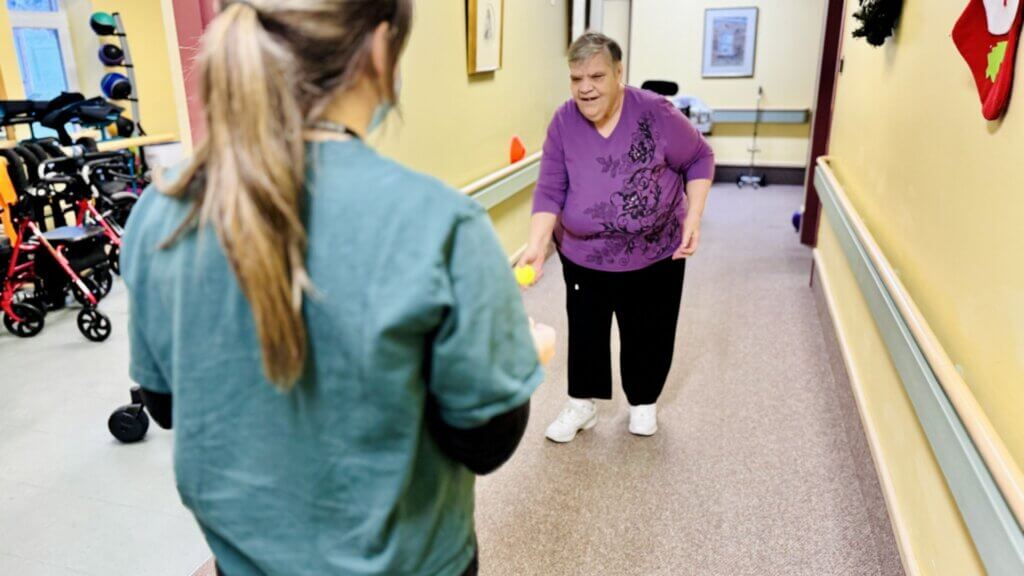
While no two days look alike, Alyssa starts each day by leading a resident exercise class. “I really enjoy exercise class because we typically see a big group of enthusiastic residents ready to start their day with us,” Alyssa said.
Mike F. explained his colleagues from the Life Enrichment team take the lead on a walking program every other day, and then it’s all about 1-on-1 time with residents. “Each resident gets their own individualized program for physio based on their needs, injuries, and abilities. It’s structured to each person. Alyssa and I rotate through a set schedule each week.”
The team also works closely with staff and management teams to ensure consistency and collaboration in overall care for all residents.
How does physiotherapy support the quality of life for our residents?
The team emphasized the importance of movement, a critical part of the recipe for maintaining quality of life.
“It’s important for residents to maintain autonomy, even if it’s completing some basic daily tasks like brushing their teeth or washing their face. This is especially important if they have come from a setting where they have been more dependent on care,” said Mike D.
Mike D. explained that everyone gets some form of physio here at the Manor, whether it’s support for basic movement, gaining back the ability to walk, maintaining the ability to complete specific functional tasks, or tending to an injury; every resident has a plan of care which includes movement.
What are some common goals you help residents work toward?
While mobility is always the big picture goal, Mike F. explained some residents have very specific goals they want to work toward accomplishing or maintaining.
“Sometimes it’s about the opportunity to go home on the weekends and spend time with their family, other times it’s about being able to walk up the stairs or taking a drive in the car with a loved one,” Mike F. said.
Mike D. added that falling or the fear of falling can also be a barrier to physio. “We work to break down those barriers and find solutions to keep residents safe and active.” He added, movement can also be a huge factor in pain management and combating illness, which further emphasizes the importance of the team’s function in long-term care.
How do you work with other departments within the home to support residents?
Mike D. explained that every resident receives a care plan encompassing elements from every department as a holistic approach to care. Mike F. added that because they tend to have the ability to spend a lot of time with each resident, the physio team can be a good support to the other teams if they are dealing with challenging behaviours or brainstorming new support mechanisms.
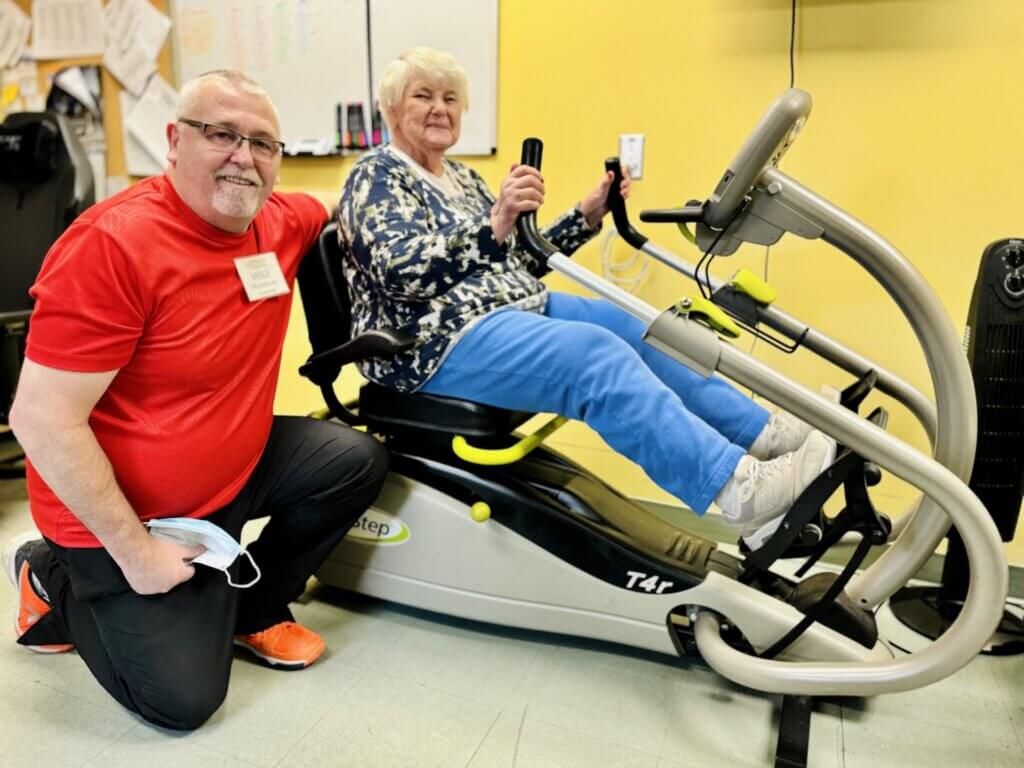
Mike D. further explained they work closely with Brockville Home Health Care and are the first point of contact if a resident requires any sort of equipment or assistive devices. “We can provide temporary wheelchairs or other assistive devices while helping families to acquire equipment.”
What is something you wish more people understood about physiotherapy in a long-term care setting?
A common misconception is that if a resident is in pain, they should stop moving, or if safety concerns arise, they should stop moving.
Mike D. explained, “what I want people to know is that movement is just as important as basic hygiene practices and can actually alleviate issues causing pain.” He went on to explain, “the issue of safety comes up a lot, but putting someone in a wheelchair or a restrictive device should always be a last resort. Our team works together with other departments at the Manor to come up with creative ways to avoid restrictive devices and maintain quality of life.”
Mike F. explained he understands the public perception is often that physio is just an extra service offered, but in reality, physio is a requirement by Ministry standards and offered daily by a full-time team.
Is there a moment or a success story that has stuck with you?
The team enjoys weekly success stories, but one resident truly stood out as a major breakthrough recently.
Alyssa explained their resident had been told at another long-term care home that it was unlikely she would walk again. “That prior diagnosis really gave us more motivation to get her walking again. When we weren’t initially successful, we collaborated as a team and came up with different plans to be able to make it happen. We got her moving slowly but surely, now she walks independently.”
Mike D. really attributes the success of his team to thinking outside of the box and getting creative.
“I personally love a challenge,” Mike F. said, smiling. “A significant number of residents, especially those from a hospital setting, come to us as a lift transfer, and with the help of our team, are now walking regularly.”
What is something fun or surprising about your team that others might not know?
“We trial everything first,” Mike D. explained. “We’re well known for having a lot of fun and encouraging healthy competition among residents,” he laughed. Mike D. added that they always remind residents that the team would never ask them to do something the team can’t do themselves, and residents can always say I want to see you do it first, and we’re happy to practice what we preach!”
Beyond the Plate: Insights from Our Dietitian, Charlotte Roorda
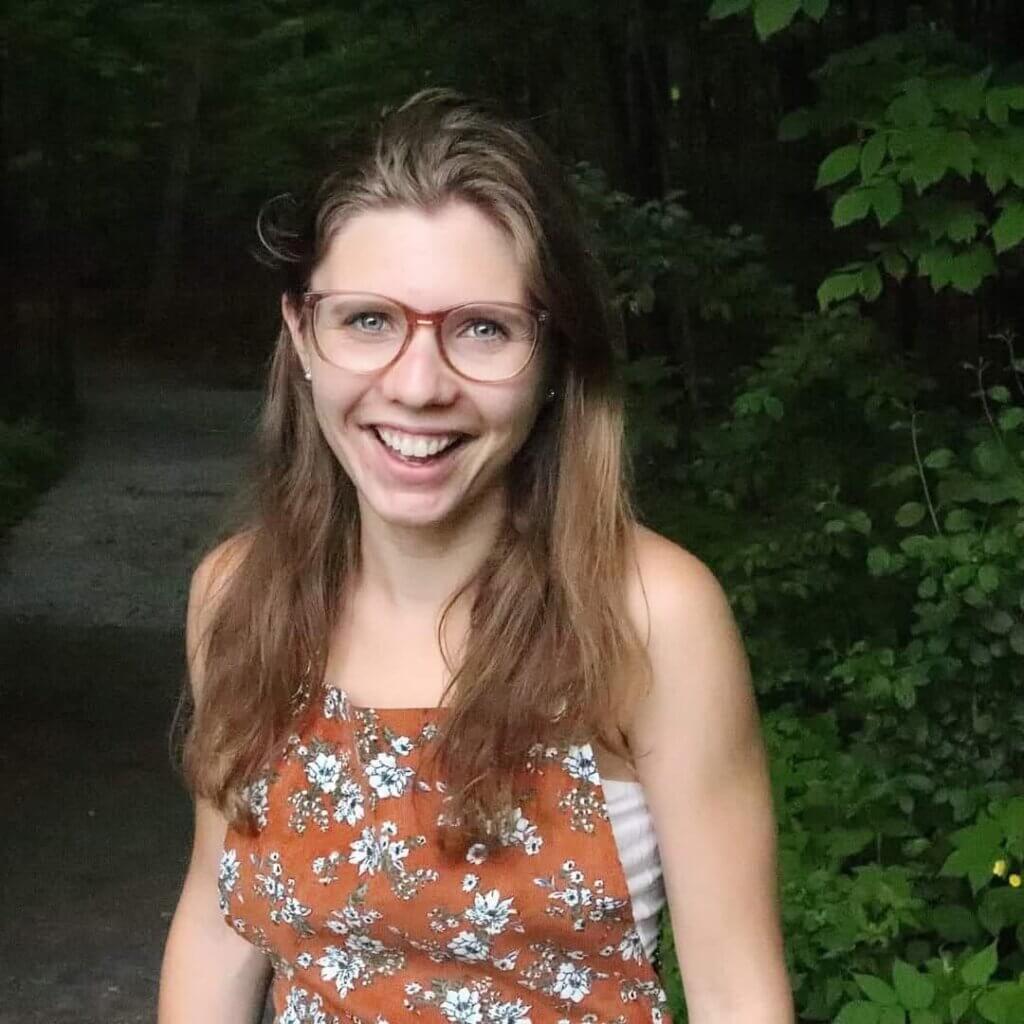
Eating well is part of living well, that’s why at Sherwood Park Manor we invest in the expertise of nutritionists like Charlotte Roorda. As a registered dietician, Charlotte brings a wealth of knowledge and a genuine passion for supporting our residents through nutrition. Let’s chat with Charlotte about her journey and her role here at the Manor.
What inspired you to become a Dietitian and what drew you to long-term care?
Charlotte shared that while she always had a strong interest in health, finding the right career path took a little exploration after graduation. It was shadowing a family friend who worked as a Dietitian at Kingston General Hospital that truly resonated with her.
“Seeing how they connected with patients and the positive impact of nutrition on their well-being was really inspiring,” she said. That positive experience fueled her studies and internship, ultimately leading her to become a Registered Dietitian.
She shared that positivity and support continued throughout her undergraduate studies and internship which ultimately lead her to becoming a Registered Dietitian. Charlotte explained that her desire to take her career to a long-term care home was after completing an internship at a long-term care facility.
“My supervisor [at the home] was both the dietary manager and the home’s Registered Dietitian, which gave me a great perspective on both the management and clinical aspects,” Charlotte explained. “From a clinical standpoint, I really valued the opportunity to build meaningful relationships with the residents, which isn’t always as common in acute care.”
Tell us a bit more about yourself, who is Charlotte outside of work?
Charlotte describes herself as someone who appreciates the simple things. “I enjoy getting out for a hike, settling in with a good book, and spending quality time with my family and friends.”
What are some things people might not realize about the role of nutrition in long-term care?
“One common misconception is that it’s a slower pace compared to a hospital setting,” Charlotte clarified. “But in long-term care, Registered Dietitians are often involved in every step of a resident’s nutrition journey. This includes assessments, developing and implementing nutrition plans, ensuring appropriate food textures and fluid consistencies, providing education and training to staff, and actively participating in care conferences with residents, their families, and other team members.”
How do you navigate creating meal plans that cater to a wide range of dietary needs and restrictions here?
Charlotte explained it can be a complex process to meet the guidelines set by the ministry while managing the challenges of access to consistent cooking methods and specific foods.
“Often, the initial focus is on creating a primary menu that meets the broadest range of needs, and then we make individual adjustments as necessary for specific residents and their restrictions,” she said. Open communication is key, as residents’ dietary needs can evolve.
Charlotte emphasized that a significant part of her role involves keeping staff informed through care plans, formal meetings, dietary requisition forms, and ongoing informal communication. Depending on individual needs, some residents may even have designated personalized items in the fridge for staff to prepare upon request.
What are some creative strategies you use to support a positive mealtime experience for your residents?
Charlotte explains that it starts with the seating arrangements. “There’s a lot that goes into seating plans and arrangements in the dining room to ensure a calm and positive experience.” She continues, “engaging residents in conversation during meals, regardless of their ability to respond or interact, and just being mindful that residents remain the primary focus in the dining room is so crucial.”
Charlotte also explained that the staff take care to create a nice presentation on the plate and accommodate residents as they’re able to further elevate meals.
What is the most rewarding part of your job?
“Having the opportunity to build meaningful connections with the residents.”
Finally, a fun question: If you could only choose one meal to eat for the rest of your life, what would it be?
“I honestly don’t know if I could pick one!” Charlotte joked that she tends to go for extended periods of time eating the same meal and then will switch. “Right now, it’s plain Greek yogurt with cinnamon, nutmeg, roasted almonds and cranberries!”